사이트맵 ×

토탈산업
현대보테코
리텍전시회

Market trends

엠쓰리파트너스
hnp인터프라
휴먼텍
한국마쓰이
기사제목
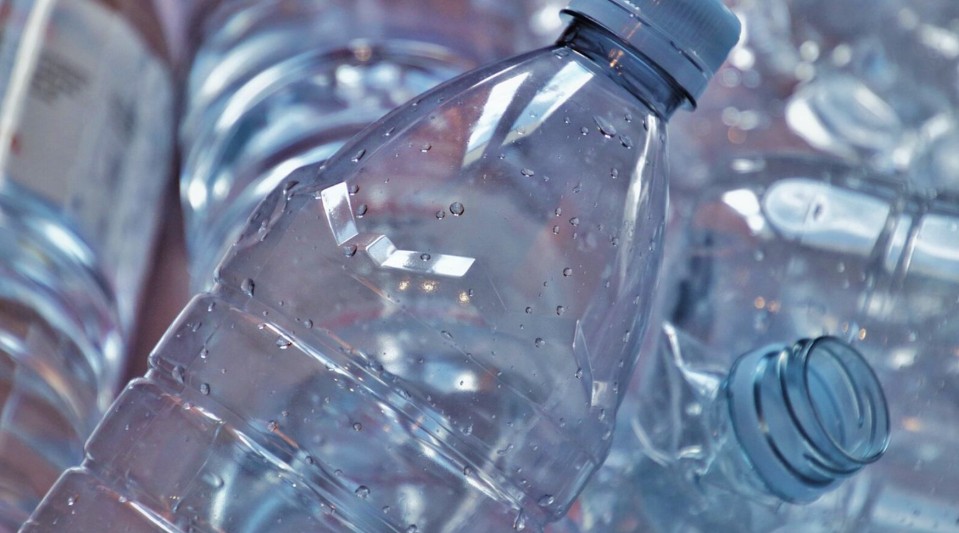
 Japan’s new rules push PET bottle makers to use recycled plastic   PET bottles  Japan’s Ministry of Economy, Trade and Industry (METI) has unveiled design certification standards for PET beverage bottles under the Plastic Resource Recycling Promotion Act of 2022. The criteria, published on 24 July, aim to improve the recyclability and resource efficiency of plastic beverage containers and will take effect on 24 January 2026. Certified bottles will be recognised under Japan’s Green Purchase Act, which mandates environmentally conscious public procurement. This integration gives certified products a competitive advantage in government contracts and is expected to accelerate private-sector adoption of recyclable packaging.  Material and design standards To qualify for certification, bottles must contain at least 15% recycled or bio-based PET, in line with Japan Industrial Standard (JIS Q 14021) definitions for recycled content. In addition, bottles must be made entirely from uncoloured PET and free from any additives that could hinder recycling. Printing directly on the bottle is prohibited except for essential details such as the expiry date or lot number. For large-volume bottles that include handles, the regulation specifies that handles must be made from colourless PET, polyethylene (PE), or polypropylene (PP) with a specific gravity below 1.0. Labels may not contain polyvinyl chloride (PVC) or aluminium laminates and must be easily removable through washing or air classification. Inks used must not adhere to the bottle surface. Caps must be made primarily of PE or PP with a density under 1.0 and cannot contain PVC or aluminium. If a cap includes a glass marble or gasket—used in traditional carbonated drink bottles—the method of removal must be clearly indicated on the label. The regulation also sets maximum bottle weights according to the container’s capacity and intended use, such as aseptic, pressure-resistant, or heat-resistant applications. These formulas encourage manufacturers to minimise plastic use without compromising functionality. To receive certification, companies must submit their bottle designs to METI, demonstrate compliance with all design and material requirements, and publicly disclose information about their certified products.  General rules for food-contact plastics Japan introduced new rules for food-contact plastics in June 2025. The Asian country introduced a Positive List system regulating synthetic resins used in food-contact utensils, containers, and packaging in June 2020 under its Food Sanitation Act. The legislation allowed for a 5-year transition period which has expired in June 2025. Only materials listed in the Positive List may now be used in food-contact applications. Some exemption criteria apply, such as migration into food below 0.01 ppm or use in non-contact layers that do not affect food safety. Manufacturers and importers of raw materials or plastic utensils, containers, and packaging must provide evidence of compliance with the Positive List. Their users and distributors, in turn, are required to verify and communicate compliance. Compliance can be demonstrated through a Certificate of Compliance issued by the Japan Institute for Chemical Research and Evaluation (JCII).  * Source : https://www.plasticsnews.com/news/japan-rules-push-pet-bottle-makers-use-recycled-plastic/    
이명규 기자 2025-11-20
기사제목
 Polypropylene market still shaky as overcapacity outpaces demand   Ramesh Iyer outlined the latest trends in the polypropylene market at the recent Society of Plastics Engineers TPO Conference in Troy, Mich. (Photo by Frank Esposito)  The polypropylene resin market continues to be a tough one — and not for the faint of heart. The sector is still struggling with too much capacity and not enough demand, according to market veteran Ramesh Iyer, who outlined the latest trends at the recent Society of Plastics Engineers TPO Conference in Troy, Mich. Iyer, head of Americas content for global consulting firm ICIS, joined the company in 2021 after more than 30 years in materials roles with Asahi Kasei Plastics North America, Ems-Chemie and General Motors. Overall, he said competition in the PP market is only going to intensify. A wave of new capacity — more than 69 billion pounds between 2019 and 2028 — is being added in Northeast Asia, particularly China. By comparison, the rest of the world will add just under 40 billion pounds during the same period, including just over 5 billion pounds in North America. As a result, global PP operating rates have dropped from 87 percent in 2019 to 76 percent in 2025. And they're not expected to return to 2019 levels until 2040, Iyer said. Global PP demand growth is expected to average 3.4 percent from 2024 to 2028, led by Southeast Asia at around 5.5 percent. North America is forecast to have the slowest growth in that period — about 1.5 percent annually. "North American domestic demand has stagnated," Iyer said. "There's been minimal new capacity. And operating rates are recovering, but they remain subpar." In the first eight months of 2025, North American PP sales fell nearly 1.5 percent, with regional production down almost 1 percent. While the region has added propylene monomer capacity — a key feedstock for PP — those additions haven't translated into significantly higher propylene supply, Iyer noted. He described U.S. propylene as "the most volatile petrochemical" in terms of pricing, largely due to low inventories, production outages and the shift toward ethane cracking. Tariffs may have affected some PP end users, but the overall market hasn't seen much disruption, since only about 5 percent of PP made in North America is exported — and imports make up a similarly small share. Profit margins for North American PP peaked in 2021 but have since fallen by about 40 cents per pound, Iyer said. He also noted that China's role in the global PP market has changed. Once a demand driver, the country has rapidly added capacity — and its aging population is beginning to weigh on domestic PP demand. Looking ahead, Iyer said more global rationalization is likely for high-cost producers. In North America, supplies "will remain long for several years," he added. Most growth opportunities will come from developing countries, Iyer said, and any long-term strategy for PP needs to factor in shifting global demographics.  * Source : https://www.plasticsnews.com/news/polypropylene-market-faces-prolonged-oversupply-global-capacity-surges-demand-stalls/    
이명규 기자 2025-11-20
기사제목
 AI makes material analysis faster and easier    XAS makes the identification of materials and their properties easier   Scientists have developed a new way to use artificial intelligence (AI) to automatically identify what materials are made of and what their properties are. The method uses X-ray absorption spectroscopy data to quickly and accurately identify materials, which could speed up the development of new technologies. X-ray absorption spectroscopy (XAS) involves shooting high-energy X-rays at a material and recording how X-rays of different energy levels are absorbed. XAS produces a spectrum of X-rays with varying energies. This spectrum, called spectral data, acts like a unique fingerprint of the material, helping scientists to identify the elements present and understand how the atoms are arranged. So far, experts have had to manually analyse this fingerprint by examining the data and comparing it to known materials. Developing an automated method that can establish a clear and objective link between XAS data and the underlying material properties has been a long-standing challenge – but it is one which researchers in Japan say they have now begun to overcome with the help of machine learning. Their study was published in the journal Scientific Reports on 10 November 2025. The research team, headed by Professor Masato Kotsugi from the Department of Material Science and Technology at Tokyo University of Science (TUS), Japan, tested four machine learning methods: Principal Component Analysis (PCA), Multidimensional Scaling (MDS), t-distributed Stochastic Neighbor Embedding (t-SNE), and Uniform Manifold Approximation and Projection (UMAP). The team trained the AI using data from three different phases of boron nitride, a material used in electronics and energy storage. Due to atomic modifications, structural defects, impurities, and doped elements, various boron compounds display unique, complex spectral variations. Using AI, this highly complex data with many variables is simplified to its core components, capturing only the essential features. In XAS, where datasets can contain thousands of variables, machine learning enables scientists to focus on patterns that genuinely reflect the materials’ electronic states. Of the methods tested, UMAP performed exceptionally well in classifying complex spectral data according to different atomic structures and defects. It also represents a more sophisticated approach than the team’s previous statistical-similarity-based method. Although that method was accurate, this new AI-driven approach demonstrates even greater accuracy and can also identify meaningful variations in electronic states. Discussing the study’s impact, Prof. Kotsugi noted that this method ‘demonstrates the potential of autonomous structural identification, opening up new possibilities for data-driven material design and development of novel materials.’ Looking ahead, it has the potential to accelerate the development of new materials, advancing key fields such as semiconductors, catalysis, and energy storage, and helping build a more sustainable future.  * Source : https://www.plasticsnews.com/news/ai-makes-material-analysis-faster-and-easier/    
이명규 기자 2025-11-20
기사제목
 Auto plastics recycling effort has ‘long way to go'    Steve TolokenFrom left, Amanda Martin, GIC; Matthias Scheibitz, BASF; Peter Schwarz, Covestro; Erik Licht, LyondellBasell; and John Mortell, Plastics Europe.     A new pilot project aims to improve upon an unfortunate reality for the auto industry. Recycling of the plastics they use is challenging, and new vehicles have less than 3 percent recycled content in their plastic parts. An Oct. 9 panel at K 2025 looked at the problem and the status of an effort to tackle that by the Global Impact Coalition, a chemical industry group that works to lower the sector's environmental and carbon footprint. A big challenge for recycling cars is that new vehicles have dozens of different types of plastic spread across thousands of components, said Amanda Martin, communications lead for the Geneva-based GIC and moderator of the panel. "How do we pull out all these parts, recycle them and put them back into use in other materials, and specifically in a closed-loop system in other vehicles?" she asked. "New vehicles have less than 2.5 percent of recycled content in plastic parts, so we have a long way to go to increase circularity in vehicles." More than 800,000 metric tons of end-of-life vehicle (ELV) plastics are incinerated or landfilled each year in the European Union, a significant environmental and economic loss, the coalition said in a news release. The project is in its first phase, where it's dismantling, shredding and sorting the plastics in 100 cars in the Netherlands and Germany, clustering them into 10 types of polymers and auto parts for the coalition companies to recycle. The overall goal is to "optimize a new approach to dismantling, sorting and recycling plastic fractions under real-world conditions," the coalition said. The project, which includes eight companies, is still working through its first phase and figuring out next steps. "It's not over yet, and we are looking to how do we take this forward in a phase 2 next year," Martin told the audience in Düsseldorf.   Ambitious targets preferred The eight companies — including large plastic resin makers BASF, Covestro, LG Chemical, LyondellBasell, Mitsubishi Chemical Group and Sabic — are working together in a precompetitive fashion but will benefit from European Union recycling targets under the ELV directive, the panel said. "Regulatory should set targets, probably also ambitious targets, because only setting ambitious targets will really drive development and drive innovation," said Peter Schwarz, head of sustainability technologies, engineering plastics, at Covestro. "We really have to cooperate, to work together, to exchange and also probably not always hide behind IP barriers in order to really learn about what is best," he said. The coalition said the European Union is close to finishing its ELV directive, initially proposing that, by 2030, 25 percent of plastics in new cars should come from recycled materials, with about 25 percent of that recycled plastic coming from end-of-life cars, creating a closed-loop system. "Hopefully by the end of the year we will have very definitively exact targets and exact times," said John Mortell, senior policy manager with trade association Plastics Europe. "That's maybe a 20 percent target by 2032, a 25 percent target by 2036. And with different materials, which materials are included, pre-consumer, how much bio-based materials and also what the closed loop will be here," he said. "That's a very important part of this." Martin asked the panel, held in the Plastics Europe booth, what should happen to move to commercial viability. "Someone has to pump money into the system to make it work, and what is behind it is extended producer responsibility systems," said Matthias Scheibitz, head of sustainability strategy for BASF Performance Materials. He pointed to refrigerators as an example of EPR in Europe, where companies putting refrigerators on the market pay fees for end-of-life management.  Chemical recycling needed Schwarz said chemical recycling is critical to making automotive plastics recycling viable. "Closed-loop recycling car-to-car will not work without chemical recycling — full stop," he said. "We have a zoo of materials in a car, and even if you do sorting, you still have mixed fractions. "If you do mechanical recycling with these, you can make park benches or something like that, but nothing that can go back into a car," Schwarz said. Erik Licht, director of new business development, APS Europe, for LyondellBasell, said the entire supply chain, including recycling companies, has to be able to make money and have incentives to make the system work. "By 2032, regulations will come, but in automotive, we need to start now," he said. "We have to have the network. We have to have hubs and megahubs because you can't transport plastics over distance. It destroys the costs."  * Source : https://www.plasticsnews.com/news/only-25-percent-recycled-content-auto-plastic-coalition-sees-long-way-go   
이명규 기자 2025-10-19
기사제목
 Polypropylene prices hold steady in September, drop likely in October   File photo    Polypropylene resin prices stayed flat in North America in September after declining in the previous two months. But pricing for that material might be a different story in October, with market sources anticipating lower prices. Regional PP prices had dropped an average of 2 cents per pound in August after falling 1 cent in July. June prices had been up 0.5 cents. PP market prices continue to follow changes in polymer-grade propylene (PGP) feedstock. PGP supplies had been tight earlier in the summer, but improved in July and August as three PDH process units that make PGP increased their production rates. Those improvements made it more difficult for PP makers to maintain June price levels. North American PP inventories increased by almost 70 million pounds in August, as regional demand dropped by 1 percent, according to a market report from RTI Global. PGP prices could be considerably lower in October, according to an Oct. 9 report from PP supplier Blue Clover of New York. PGP prices already had dropped 6.25 cents between Sept. 24 and Oct. 9, according to the report, and aren't expected to improve. The PGP drop through Oct. 9 "is over a lot of volume," the report said. In the first eight days of October, 94 million pounds of PGP were traded on the spot market, almost equaling the 101 million pounds traded for all of September. "There is an avalanche of PGP available," the report said, adding the high volume is happening even with a maintenance turnaround for a PDH unit in the Gulf Coast reducing short-term PGP supplies. On the PP side, the report said PP makers "have worked diligently over the past six months to try as best they can to keep the market in balance," but the situation remains volatile. "Levers have included pulling back on [PP] operating rates, funneling material into export and being careful not to build inventories," the report added. "However, the incredible pullback in demand for PP and other PGP derivatives from convertors and compounders is impossible to contend with from the supply side." The report also said that China "continues to flood so many markets with PP that it absolutely crushes U.S. PP exports, which have been a historically important part of the demand profile." Counting previous increases and decreases, regional PP prices are down a net of 3.5 cents so far in 2025.  * Source : https://www.plasticsnews.com/resin-pricing/north-american-polypropylene-prices-flat-september-october-drop-expected-pgp-floods   
이명규 기자 2025-10-19
기사제목
 German industry says plastics treaty can boost recycling, speed investment   Caroline SeidelThree plastics industry leaders from Germany — Thorsten Kühmann, general manager of plastics and rubber machinery association VDMA; Oliver Möllenstädt, executive director of the German Association of Plastic Converters; and Christine Bunte, head of Plastics Europe Deutschland — agreed there is a need for a global agreement on plastics sustainability.    The German plastics industry wants a global plastics treaty to boost recycling and waste management and quicken its transformation to a greener manufacturing industry. That was the view from three German plastics associations at an Oct. 7 news conference on the eve of the K 2025 show in Düsseldorf. While the plastics treaty talks have proven difficult — the last round in August in Geneva failed to reach agreement and press reports Oct. 7 said the head of the treaty process was about to step down — the associations said an agreement could help build a case for green investment in plastics. "We are strong supporters of this global [plastics] agreement because we need regulations on a global scale," said Thorsten Kühmann, general manager of plastics and rubber machinery for the German VDMA association. Similarly, the head of the German Association of Plastic Converters, or GKV, said the treaty and other policy should support increasing the use of recycled content and strengthen collection of plastic waste. "It's necessary from our point of view, to start now with these investments, and these investments need a global framework," said Oliver Möllenstädt, GKV's executive director. "This is why we as a German plastics industry are very convinced that we need a global plastics treaty as soon as possible." The third group at the news conference, Plastics Europe Deutschland, said that 2.7 billion people in the world lack access to waste management. "That's almost every third person on the planet who does not have access, and that, of course, puts a tremendous pressure on the environment," said Christine Bunte, head of Plastics Europe Deutschland. "The global plastics treaty can really be a vehicle to install waste management on a global level and really improve that. And it can help turn plastics from a waste into a resource." "It is really the one chance that we have, on a global level, to change the way that plastics, and particularly plastics waste, are being handled," she said. Möllenstädt said the treaty, for example, could establish global standards for extended producer responsibility systems for plastic packaging. He also outlined a seven-point policy framework for the European Union that GKV supported, including EU-wide design for recycling rules, developing the European single market for plastics recycling and rules for recycled content. The groups, however, were particular about what they wanted — and didn't want — in any treaty, suggesting it should stay focused on waste management. "From our point of view, the starting point must be waste management, it's an overwhelming aspect," Möllenstädt said. "All the other aspects can follow because a treaty on the United Nations level is not a monolithic structure which is ready at the beginning." Some of the key stumbling blocks in the talks have been over whether the agreement should limit plastics production and strengthen global regulations around potentially hazardous chemicals and additives used in plastics. The European Commission and many European countries in the treaty are part of a so-called "high ambition coalition" advocating for a more aggressive agreement. But GKV said European nations should be more pragmatic. "The European Union, the European Commission, started with very high ambitions in this negotiation of the plastics treaty," Möllenstädt said. "From our point of view, a more pragmatic way would be better to solve these problems. … It's necessary to build up structures to finance waste management in developing countries."  Tariffs ‘difficult way' to help US industry VDMA said German-made injection molding machines will be at least 20 percent more expensive in the United States because of tariffs enacted by President Trump. Kühmann said that will come from a 15 percent tariff on general machinery and imports, as well as tariffs enacted in August to put duties on the value of steel used in making plastics machinery, a potentially difficult figure to determine. He said U.S. manufacturing of injection molding machinery can only supply 10 percent of the U.S. demand. "In the United States, you've got a strong plastics industry altogether, there's only one link which is missing, and that's the machinery side," he said. "In the case of injection molding … 90 percent of them are imported from Europe, Japan, Canada and China." The U.S. tariffs, which apply to machinery globally, will raise the price of U.S. machines from 20 percent to 60 percent, depending on the country of origin of the equipment, he said. "To make the American industry great again, that is a difficult way to handle this," Kühmann said. "If we want to have an open and global market, tariffs are definitely not the way you should prefer to go."  * Source : https://www.plasticsnews.com/news/eve-k-german-industry-wants-plastics-treaty-soon-possible   
이명규 기자 2025-10-19
기사제목
 Plastics Industry Association says tariff uncertainty could dent growth    Carolline SeidelPlastics Industry Association Chief Economist Perc Pineda at K 2022.   While the U.S. plastics industry's economic performance was solid in 2024, it could see its shipments and employment contract slightly because of uncertainty over tariffs and trade policy, a U.S. industry association says. At a Sept. 16 online briefing to release its 2025 Size and Impact Report, executives at the Plastics Industry Association pointed to good fundamentals but said uncertainty regarding tariffs and trade policy could hold back growth. Perc Pineda, chief economist with the association, said the plastics industry could see the economic value of its shipments fall slightly. "Because of the uncertainty that's holding back the manufacturing sector, the main customer of the plastics industry, we could see shipments in plastics manufacturing pull back by 0.5 percent," he said. "By and large, what appears to be holding the manufacturing sector back are uncertainties tied to higher tariffs and the unpredictability of new and revised tariff measures," Pineda said. "As a consequence, plastics manufacturing employment could also decrease by 1.1 percent." The report, which is a detailed look at 2024 economic data for different parts of the industry, said the total employment in the plastics industry rose 1.3 percent to 1.066 million in 2024. The value of shipments also rose to $551 billion, a 0.2 percent increase from 2023. It's the eighth-largest sector in U.S. manufacturing, and Pineda said the economic data points to solid underlying fundamentals. In both employment and shipments, plastics did better than manufacturing overall last year. "We actually thrived in 2024 in spite of the interest rate-driven manufacturing slump," he said. "This tells me that there is plenty of room for the plastics industry to grow, considering that we are an impactful industry and we are vital to the U.S. economy." But tariffs are clouding the outlook.   Seaholm   Seeking clarity Matt Seaholm, the president and CEO of the association, said it hopes for more clarity around trade policy from Washington. He said the association has been advocating for plastics machinery and materials to be seen as inputs for other manufacturing sectors, and as a result be given some tariff relief. "I'm hopeful that there will be some recognition of plastics machinery and materials as a manufacturing input, and some tariff relief could ultimately be found in the coming year," Seaholm said. Companies in the industry have been trying to manage the impact of President Donald Trump's administration's decision in August to expand steel tariffs to include the steel content of imported plastics machinery and molds, along with more than 400 other industrial products. The U.S. plastics sector imports about 75 percent of its machinery. Some industry groups, like the American Mold Builders Association, which represents plastic mold manufacturing companies, support the Trump administration's expanded steel tariffs. Seaholm said companies are struggling with uncertainty in the economy and frustrated with shifts in trade policy. "The frustrations virtually all industries are currently feeling about the dramatic shifts in American trade policies are hopefully only presenting short-term challenges and will eventually return to a norm that supports economic growth," Seaholm said. "There are no doubt headwinds facing the industry and the economy," he said in opening comments on the webinar. "Uncertainty is always one of the biggest impediments to economic investment and growth, and uncertainty is abound. Interest rates, government spending, new regulations, consumer strength, sentiment toward plastics and yes, of course, tariffs and trade policy." Pineda predicted that there will be some resolution to the steel and aluminum tariff debate because it's a key input to manufacturing. "I think over time we will see a resolution to this issue, because I don't really think that the global trading environment could withstand continued higher cost of steel and aluminum," he said. Seaholm did point to an economic boost from the large tax legislation that the Republican-controlled Congress passed and that Trump signed in July, in particular, from research and development tax credits and expensing provisions the industry lobbied for. But he also said the impact of that law "to some degree … remains to be seen." "What we saw get passed this summer, both from an R&D tax credit standpoint, as well as immediate expensing, really presents some tremendous opportunities for capital investment," Seaholm said. "That is, without a doubt, a huge win." "But there's also the trade and tariff component to this that is certainly putting the pause on a lot of economic development and investment, and that push and pull is really creating a bit of, I guess, pause in the plastics industry investment," he said. "It's frustrating. I know our members are telling us that on a regular basis." * Source : https://www.plasticsnews.com/news/association-says-tariff-uncertainty-pausing-plastic-investment  
이명규 기자 2025-09-21
기사제목
 European resin prices in a post-summer slump   Vioneo   European polyolefin prices have fallen slightly over he last two months, PVC prices have remained stable while polystyrene prices have continued to tumble. At the beginning of August, most polyolefin producers attempted to stabilize prices in order to improve their margins even though both ethylene and propylene contract settlements had fallen by €10 per metric ton. However, buyer resistance forced sellers to offer discounts similar to the cost reduction. In September, polypropylene prices remained at the previous month’s level as the propylene contract price was unchanged. Polyethylene prices were also unchanged despite a gain of €5 per tonne for the ethylene contract price. The order situation was too low to justify a small price rise. In August, base PVC prices fell in proportion (down €5 per tonne) to the €10 per tonne reduction in the cost of ethylene. In September, the price reduction was reversed in line with the €5 per tonne rise in the cost of ethylene. Polystyrene prices have fallen in each of the last six months to hit their lowest level since  summer 2023. The styrene monomer reference cost has fallen sharply and demand has remained very weak. In August, PS prices fell by €25-30 per tonne, which was less than the €35 per tonne reduction in styrene monomer as sellers aimed to retain aa part of the cost reduction to improve their operating margins. In September, polystyrene prices are down in line with the €46 per tonne decline in the styrene monomer reference price. PET prices fell in August due to a combination of weaker demand and lower raw material costs to reverse the upward trend in the previous month. PET prices have remained unchanged by mid-September on stable feedstock costs and low demand.  Supply adequate Supply is more than adequate to meet the low level of demand across most product sectors, despite polymer production plants continuing to operate at reduced rates and a number of plant shutdowns for planned and unplanned maintenance. High density PE, linear low density PE, PS, PET and PP production from local producers is at a normal level. Availability is also being supplemented by imports. Low density PE supply is low but adequate as import volumes have declined. PVC supply is well balanced. A  summary of recent supply-related developments is summarized below. - Unipetrol RPA restarted PP|PE/ethylene production at its Czech Republic plant Sept. 15 following maintenance.- DUCOR Petrochemicals restarted its PP lines in the Netherlands in early September following force majeure.- Ineos shut down its PP|PE and ethylene lines in the United Kingdom on Sept. 2 for maintenance.- Inovyn shut down several European PVC production lines for maintenance late August.- Total PC restarted production of PP|PE at several locations in France early September following force majeure.- Orlen shut down its Polish LDPE facility early September for maintenance.  Demand weak Polymer demand has picked up slightly after the summer holiday season but remains well below what would normally be expected. This is largely explained by the sluggish European economy and continued consumer uncertainty. In view of the slow pick-up in demand, converters are adopting a cautious approach to restocking and are only buying sufficient material to meet their immediate production needs.  October outlook Brent crude oil prices have fallen from a peak of $72.6 per barrel in early August to $67.3 per barrel in mid-September, yet naphtha prices have been more stable over the same period. OPEC has announced that it will increase oil production in October, which will likely exert further downward pressure on crude oi prices. Ongoing low demand and an adequate supply indicate either stable or slight downward polymer price pressure.  * Source : https://www.plasticsnews.com/resin-pricing/european-resin-prices-post-summer-slump   
이명규 기자 2025-09-21